Introduction
Understanding DEF for locomotives is critical as rail operators prepare for stricter emissions standards in 2026. Tier 4 locomotives are designed to reduce criteria pollutant emissions by 70 percent over standard locomotives. These units produce more than 90 percent less particulate matter and nitrogen oxides (NOx) than earlier models. But most Tier 4 locomotives achieve this through Exhaust Gas Recirculation (EGR) rather than Selective Catalytic Reduction systems that require DEF. This creates confusion about what does def do in rail applications and how does def work in diesel engines designed for locomotives. We’ve created this piece to clarify when emissions def is needed, explain exhaust def requirements and help you prepare your fleet for evolving compliance standards.
Understanding Rail Emissions Standards and Tier 4 Locomotives
EPA Tier Classification System Explained
The EPA created its first locomotive emissions standards in 1998. This tier-based framework applies to locomotives that were manufactured in or after 1973. The regulatory structure divides emissions requirements by manufacture year and locomotive type. Tier 0 through Tier 2 standards took effect between 2000 and 2005. More stringent Tier 3 and Tier 4 requirements came later and were defined in the 2008 regulation.
The classification system applies to locomotives with total rated horsepower of 750 kilowatts (1,006 hp) or more. This covers line-haul locomotives (those exceeding 2,300 horsepower) and switch locomotives (1,006 to 2,300 horsepower) that operate within the United States. Electric locomotives, historic steam units and certain small business-owned equipment remain exempt from these standards.
Tier 4 standards became effective in 2015 for newly manufactured and remanufactured locomotives. This tier mandates NOx emissions of 1.3 g/bhp-hr, HC emissions of 0.14 g/bhp-hr and PM emissions of 0.03 g/bhp-hr for line-haul and passenger locomotives. These represent the strictest federal requirements so far. They were expected at first to require exhaust gas aftertreatment technologies such as diesel particulate filters and urea-based Selective Catalytic Reduction systems.
What Tier 4 Locomotives Mean for Your Fleet
Tier 4 locomotives reduce emissions between 65% and 85% compared to legacy Tier 2 and Tier 0 units. These engines produce more than 90% less particulate matter and nitrogen oxides than earlier models. Metrolink’s Tier 4 fleet demonstrates this capability and delivers up to 64% more horsepower than Tier 0 locomotives.
Current Tier 4 technology stands out because of the industry’s approach to meeting these standards. Manufacturers developed solutions using Exhaust Gas Recirculation rather than SCR aftertreatment systems that would require DEF for locomotives. EGR routes about 10% of exhaust gas back into the engine’s intake system. This dilutes the air-fuel mixture and reduces peak combustion temperatures. The need for large onboard DEF reservoirs and the logistics of supplying millions of gallons of fluid gets removed.
Current Compliance Requirements for 2026
Operators face reporting obligations starting July 1, 2026, under California’s In-Use Locomotive Regulation. These requirements include annual data submission on locomotive usage measured in megawatt-hours, emissions factors and spending account calculations. The compliance framework offers three options: Spending Account, Alternative Compliance Plan, or Alternative Fleet Milestone Option.
Locomotives must be certified by the EPA to Tier 4 standards or cleaner when replacing existing units. The useful life for these certifications equals either 10 years or megawatt-hours calculated by multiplying rated horsepower by 7.50, whichever arrives first. Understanding these timelines matters for operators seeking bulk DEF quote planning, even though most current Tier 4 units avoid DEF systems.
How DEF Works in Diesel Engines vs. Locomotive Applications
The Science Behind Selective Catalytic Reduction (SCR)
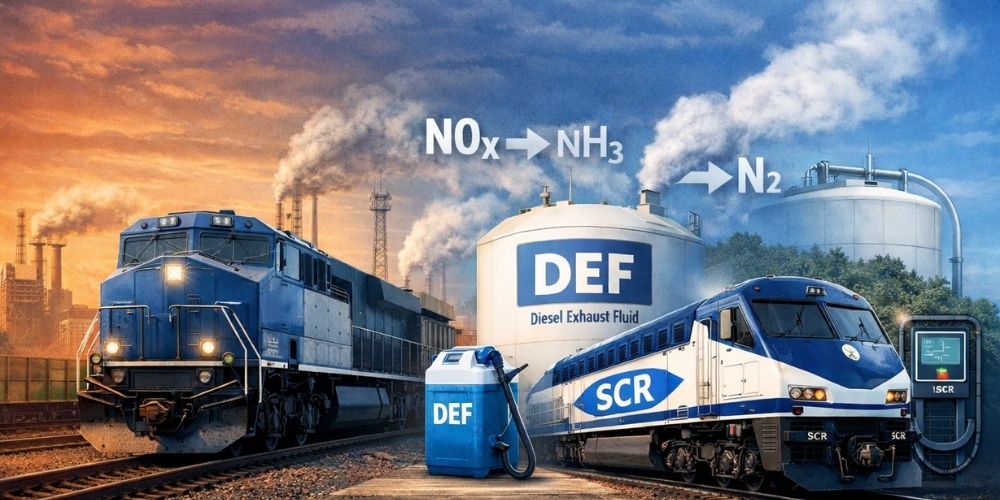
Diesel Exhaust Fluid consists of 32.5% urea and 67.5% deionized water. This aqueous solution undergoes thermal decomposition at high temperatures when injected into the exhaust pipeline and breaks down into ammonia. The ammonia then reacts with nitrogen oxides over a catalyst surface and converts these pollutants into harmless nitrogen gas and water vapor.
The injection rate ranges from 2% to 6% of diesel consumption volume. SCR systems can reduce NOx emissions up to 90% while cutting HC and CO emissions by 50% to 90% at the same time. But temperature plays a critical role. SCR effectiveness drops substantially below 200°C, with optimal performance occurring between 357°C and 447°C. Exhaust temperature must reach at least 240°C for 40% of operation for Caterpillar locomotive SCR modernizations.
Why Most Tier 4 Locomotives Use EGR Instead of DEF
Class 1 carriers were adamant in their opposition to using DEF for locomotives. GE and EMD developed engineering solutions to meet Tier 4 standards without urea-based aftertreatment. EGR reduces NOx formation within the combustion chamber by recirculating cooled exhaust gasses and lowering peak combustion temperatures.
EGR proves more suitable for low-load engines, whereas SCR excels in high-load applications. The infrastructure requirements for DEF storage, freeze protection at temperatures below 12°F, and the logistics of supplying fluid to widespread rail operations drove manufacturers toward EGR solutions. Eliminating DEF reduced operational complexity for freight operations.
Emissions DEF: When Locomotives Actually Need It
All new passenger locomotives use SCR systems to achieve Tier 4 compliance. The EMD F125 passenger locomotive carries a 410-gallon DEF tank alongside its 1,800-gallon fuel capacity. Caterpillar’s retrofit SCR system for line-haul locomotives achieves 75% NOx reduction and requires DEF meeting ISO 22241-1 standards with proper 32.5% urea concentration.
A small number of rebuilt freight locomotives have adopted SCR instead of EGR. Bulk DEF quote planning and DEF tank monitoring become critical infrastructure requirements for operators managing these units.
Meeting Rail Emissions Standards Without DEF
Exhaust Gas Recirculation Technology in Modern Locomotives
Wabtec invested approximately $700 million over 10 years to develop its EGR system as an alternative to urea-based aftertreatment. The technology routes about 10% of exhaust gas through a cooling system before feeding it back into the engine’s intake. This dilution process reduces peak combustion temperatures and then cuts NOx formation by more than 90%. The freight railroads requested this solution to avoid storing additional fluids across their extensive networks.
Fuel System Upgrades and Common Rail Technology
High-pressure common rail fuel systems maintain continuous fuel supply at constant pressure and provide better atomization and cleaner combustion. Wabtec’s FDL Advantage program modernizes existing engines with this technology. It delivers up to 5% additional fuel consumption reduction. These upgrades eliminate the need for bulk DEF quote planning while meeting EPA emissions regulations.
Maintenance Protocols for Tier 4 Compliance
Tier 4 locomotives operate until at least the 2050s with proper maintenance protocols. Regular fuel injector testing prevents emission degradation that could push engines out of compliance. Operators should consult DEF maintenance tips for units equipped with SCR systems.
Alternative Solutions for Older Locomotive Fleets
CSX’s Tier 4 switcher modernization upgrades 40- to 50-year-old Tier 0 units and provides 20% fuel efficiency improvement and 90% emissions reduction. Current Tier 4 engines accommodate biodiesel and renewable diesel. Wabtec prepares these engines to burn hydrogen and offers decarbonization paths without requiring DEF tank monitoring infrastructure.
Preparing Your Rail Operations for Future DEF Requirements
Storage and Handling Infrastructure for Rail DEF Systems
Rail yards planning for SCR-equipped locomotives need storage tanks and dispensing systems designed for DEF’s temperature sensitivity. The fluid must remain between 12°F and 86°F to prevent crystallization or degradation. Containers should be clean, sealed, and made from non-reactive materials to avoid contamination that could damage SCR systems. Engineers and maintenance crews need training programs for safe handling protocols.
Bulk DEF Procurement Strategies for Large Fleets
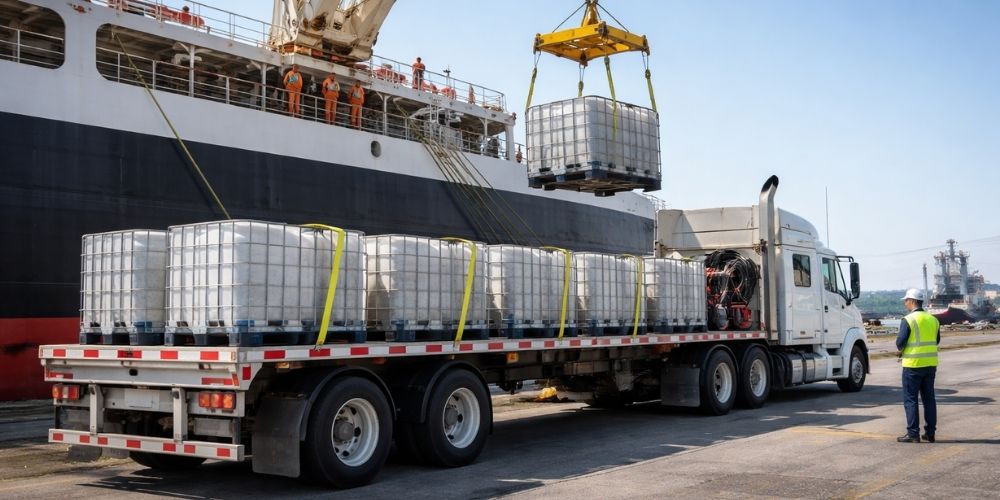
Procurement from a central source provides economies of scale that location-by-location purchasing cannot match. Bulk solutions lower per-gallon costs and improve inventory control while reducing packaging waste. Storage through totes or tanks prevents both shortages and excess inventory when sized right. DEF has a one-year shelf life when stored properly. Partnering with suppliers that offer flexible delivery schedules and DEF tank monitoring optimizes supply chain efficiency.
Cost Analysis: DEF vs. EGR Solutions
Rail operators would offset DEF costs through fuel consumption savings. SCR technology positions fleets better for future regulations with fewer required interventions compared to EGR systems. Check our DEF maintenance tips for operational guidance.
Monitoring and Reporting Emissions Compliance
Digital sensors track DEF levels throughout fleets and prevent engine shutdowns from unexpected shortages. Operators must register with EPA’s EV-CIS system and maintain manufacturer information, test lab data, and compliance records. Contact us for a bulk DEF quote tailored to your fleet’s reporting needs.
Conclusion
While most Tier 4 locomotives rely on EGR technology chiefly, passenger units and certain modernized versions require DEF for locomotives. Understanding which emissions solution your fleet uses determines infrastructure needs and compliance costs. Request a bulk DEF quote if your operations include SCR-equipped units. Planning storage and automated monitoring systems positions your fleet to succeed in the long run, whatever technology future regulations mandate.
Key Takeaways
Understanding DEF requirements for locomotives is crucial as rail operators navigate 2026 emissions compliance, though most solutions avoid DEF entirely.
• Most Tier 4 locomotives use Exhaust Gas Recirculation (EGR) instead of DEF, reducing NOx emissions by 90% without requiring urea-based fluid systems.
• Passenger locomotives and select retrofits do require DEF with SCR systems, needing 410-gallon tanks and specialized storage infrastructure for proper operation.
• Rail operators must prepare for July 2026 reporting requirements under California’s regulation, including annual emissions data and compliance pathway selection.
• EGR technology eliminates DEF logistics challenges while achieving 65-85% emissions reduction compared to legacy locomotives, making it the preferred freight solution.
• Future-proofing requires understanding both technologies since evolving regulations may mandate different approaches for new locomotive acquisitions and fleet modernization.
The key distinction lies in locomotive type and application—freight operations typically avoid DEF complexity through EGR, while passenger services embrace SCR systems requiring comprehensive DEF infrastructure planning.
FAQs
Q1. Will locomotives manufactured in 2026 require DEF systems? Most Tier 4 freight locomotives use Exhaust Gas Recirculation (EGR) technology instead of DEF systems to meet emissions standards. However, passenger locomotives and certain retrofit applications do require DEF with Selective Catalytic Reduction (SCR) systems. The specific requirement depends on the locomotive type and manufacturer’s chosen emissions control technology rather than the year of manufacture.
Q2. What quality standards must locomotive DEF meet? Locomotive DEF must meet ISO 22241-1 quality requirements, which ensures proper purity and concentration of 32.5% urea mixed with 67.5% deionized water. This certification guarantees the fluid will function correctly in SCR systems without causing damage to catalytic components or reducing emissions effectiveness.
Q3. Do all train locomotives use Diesel Exhaust Fluid? No, most freight locomotives do not use DEF. The majority of Tier 4 locomotives achieve emissions compliance through EGR technology, which eliminates the need for DEF entirely. Only passenger locomotives and a small number of rebuilt freight locomotives equipped with SCR systems require DEF for operation.
Q4. What are the new emissions compliance requirements for rail operators in 2026? Starting July 1, 2026, operators must submit annual reports including locomotive usage measured in megawatt-hours, emissions factors, and spending account calculations. Rail operators can choose between three compliance pathways: Spending Account, Alternative Compliance Plan, or Alternative Fleet Milestone Option. All replacement locomotives must be EPA-certified to Tier 4 standards or cleaner.
Q5. How much DEF do locomotives with SCR systems need to carry? Locomotives equipped with SCR systems typically carry substantial DEF tanks alongside their fuel capacity. For example, the EMD F125 passenger locomotive has a 410-gallon DEF tank paired with a 1,800-gallon fuel tank. The injection rate generally ranges from 2% to 6% of diesel fuel consumption volume.